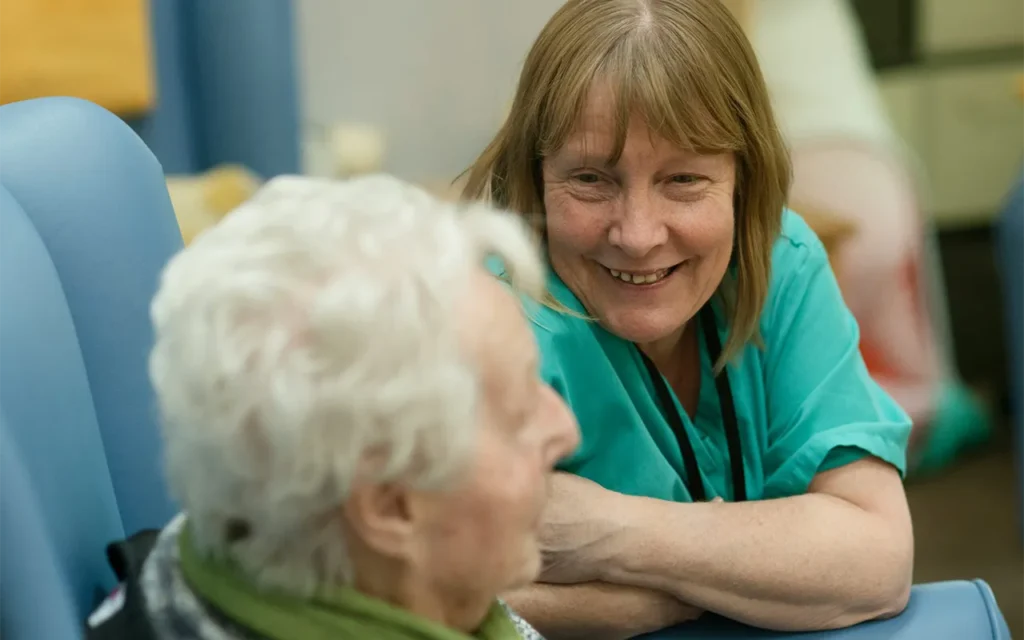
In this issue we highlight an advance in person-centered guardianship that has been developed and studied in Connecticut, New York, and Massachusetts, in response to the needs of individuals who present especially severe decisional and functional incapacities. The leading proponents in the Northeast are Guardian Ad Litem Services in Connecticut, Project Guardianship in New York City and, more recently, Public Guardian Services in Massachusetts.
While they vary in some particulars, all of these programs seek to coordinate treatment and support from multiple sources in the community under a single-tent, or “wrap-around” model that is managed by the agency. Backed by clinical, legal and administrative staff, a care manager takes responsibility for the individual across multiple domains, from housing to medical care, social and religious life, education, employment, public benefits and any other matter of importance to the individual. Agency employees are experienced and professionally trained. They share an ethic of engagement with the daily lives of clients and adherence to person-centered practices as guardians.
Social-Work Model of Guardianship
This approach to guardianship is referred to variously as a “wrap-around,” “care-coordinated” or “social-work” model of guardianship. [1] For convenience, we have adopted the “social-work” terminology for this article. It has gained attention as a model for individuals who do not have personal networks or financial means to provide a guardian, and who reside in community or care settings that do not provide active case management, leaving the individual otherwise unrepresented and at risk.
A highly-engaged model of guardianship for individuals in this situation can be, and is, provided by individual professional guardians without the backing of legal or administrative staff that a private agency can offer. Agency models can serve as examples for individual guardians, but the reverse is also true. Collaboration between and among individual guardians and the agencies that are developing a social-work model is irreplaceable.
A common feature of guardianships that adopt the social-work model is to view the role as a way of connecting with the individual, to the extent possible. If a relationship can be established with the individual, it will contribute to the success of the guardianship over time, in at least two respects. First, a guardian who knows some of the person’s history and has spent time with them can be proactive, avoiding crises by anticipating them, suggesting changes in care plans before the crisis occurs.
Second, when a supportive relationship can be established within the guardianship, the guardian is well positioned to assess whether the individual may be able to sustain that support without continued guardianship. A guardian with insight into this potential may help the individual to petition for restoration of rights, to name health care or financial agents, and/or to form a Supported Decision-Making agreement that will provide support without the indignity of involuntary process.
There is little data about how many incapacitated individuals need the social-work model of guardianship at any given time in Massachusetts. According to the Office of Adult Guardianship and Conservatorship Oversight (“OAGCO”), as of November 2025, there were 29,314 active guardianship and 6,535 active conservatorship appointments in Massachusetts. Slightly less than half of the petitioners in these cases were family members, and public or private agencies were petitioners in the other cases.
We can assume that most petitions filed by family members resulted in the appointment of a family member as guardian. Many petitions by state agencies also name family members, but the percentage is not known. A very small number of agency-filed petitions, perhaps 1,500, nominate professional guardians who will be paid by the agency itself. That leaves 14-15,000 currently-active appointments that were filed by state agencies, for which an unknown percentage are being managed by an unrelated volunteer or professional guardian. Whatever that actual number is, [2] it includes the large group of non-family member guardianships that offer no private source of payment for the guardian.
Said differently, this is the population that entered the guardianship system as unrepresented, at-risk individuals. Whether they remain at risk, or significantly unrepresented, after the appointment of a guardian is one of the fundamental questions that is raised in the comparison of a social-work model with the alternatives that are available in a system that is substantially volunteer-based.
As a practical reality, however, very few professional guardians can take on the time and expense of a fully-engaged guardianship for free, and “free” is the pay scale that Massachusetts and most other states currently offer for individuals who cannot pay privately. Nevertheless, outstanding individual commitment and examples are seen throughout the field of professional guardianship. These professionals are contributing daily to the understanding and advance of social-work models of guardianship.
In the next issue we will take a closer look at the prevailing “decisions-only” model of guardianship that is offered to most individuals who enter the system unrepresented and at risk.
[1] We use the term “guardian” in this article to include both guardians and conservators, unless the context requires otherwise.
[2] A study In 2016 suggested that there are between 3,200 and 3,800 persons in Massachusetts who would be served by a public guardian if we had one. See Moye, J., et a., “Examining The Need for a Public Guardian In Massachusetts: Phase 1,” March 11, 2016, pp. 11-14 (published by Guardian Community Trust, Inc., at https://guardianshipcenter.org/research-studies/publications/examining-the-need-for-a-public-guardian-in-massachusetts/).