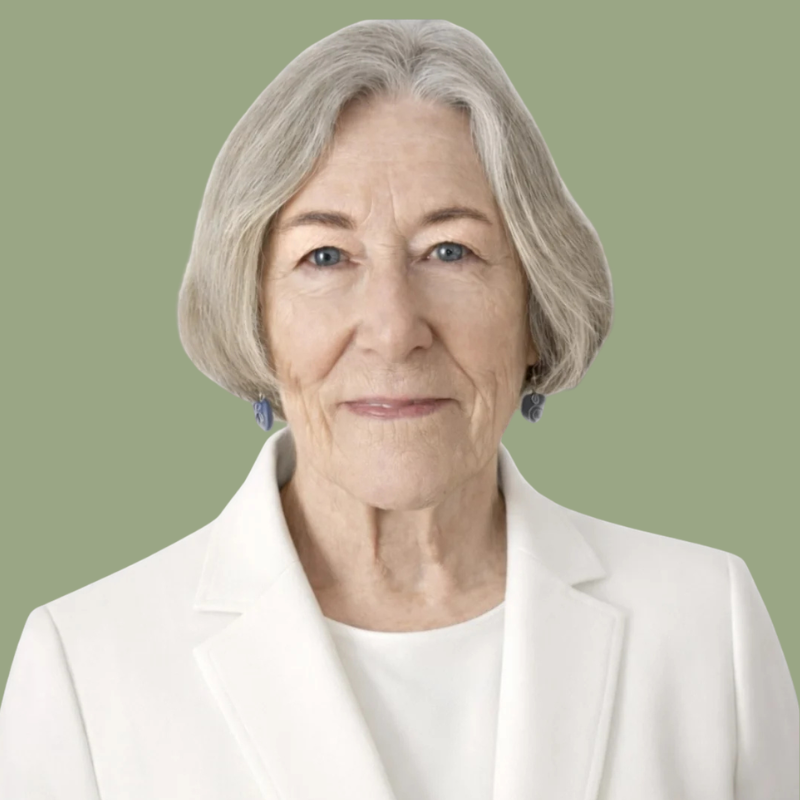
How decades of persistence helped reshape guardianship in Massachusetts.
With more than three decades in the field and an illustrious history of sparking change, Wynn A. Gerhard, Esq. has built a steadfast career fighting for the most vulnerable among us.
As the Elder Justice Fellow at The Massachusetts Guardianship Policy Institute and Guardian Community Trust, Wynn focuses on education and policy advocacy to strengthen due process protections and oversight in guardianship. But her path to this work has been anything but linear.
Originally from Long Island, New York, Wynn’s commitment to justice began early. From getting involved in local issues and political campaigns as early as high school to attending Harvard during the height of the Vietnam War and civil rights movement, Wynn’s passion for community action grew alongside the needs of the world around her.
In between receiving her bachelor’s and attending law school, Wynn prioritized real-world experience. She joined a national service program (VISTA) where she lived in a low-income community and helped organize and open a free health center. Working directly with residents, healthcare providers, and local systems gave her a first-hand look at the barriers people face in accessing care and the importance of building solutions for those who need it most.
Wynn’s first job after law school was with a Court-appointed Master overseeing a Consent Decree for a tenant class action against the Boston Housing Authority, ensuring reforms (including non-discrimination in tenant selection, maintenance, and management issues) that benefited more than 50,000 tenants.
From fighting for the rights of tenants to encountering a dynamic group of elder advocates on Cape Cod (Cape United Elders), a group actively pushing for nursing home reform, Wynn’s career naturally led her into the world of elder advocacy where she worked as Elder Law Director for Legal Services of Cape Cod and Islands.
In one defining moment, elderly members of the Cape United Elders were arrested after refusing to leave a nursing home that denied residents the right to have visitors, even when the residents had invited them.
“They were fearless,” Wynn recalls.
Wynn served as their attorney, and the case ultimately led to a ruling affirming residents’ fundamental right to remain connected to the outside world, in compliance with Federal and state law.
She carried that same drive to protect the dignity and rights of those most often overlooked into more than 30 years at Greater Boston Legal Services, where her work in elder law began to intersect with a system she would come to question more deeply: guardianship. And it started with a deeply troubling realization that people facing guardianship often didn’t understand what had happened to them.
“I would get calls from a long-term care ombudsperson about an elder in a nursing home who didn’t know who their guardian was,” she recalls. “They didn’t know how they got into a nursing home or what happened to their apartment and belongings.”
One case in particular left a mark. A woman living in a nursing home, tracked with an ankle monitor, was not allowed visitors and had no sense of how her life had led her there. Her Probate Court file contained almost nothing — just a petition and a one-page medical form, followed by the appointment of a permanent guardian. There was not even a record of where her belongings had ended up.
“If I had been robbed on the street and everything taken away,” the woman told her, “this would still be worse than that.”
Sadly, stories like these weren’t rare. This was a pattern.
“Even a criminal defendant would get more protections than that,” Wynn adds.
At that time, appointed guardians often had overwhelming caseloads. Some had as many as 70 individuals at a time, placing them in facilities and rarely seeing them. That was the boiling point for Wynn.
Alongside other advocates, she began working to change the law. Starting in the mid-1980s, Wynn and her colleagues pushed for basic due process protections through legislative reform. Together, they filed bills session after session in an effort to bring accountability and oversight to a broken system. The work was slow, and for nearly two decades, little changed.
“We knew we had to do something different,” she recalls. “We had to make a bigger splash somehow, because we weren’t getting anywhere.”
That’s when she made a bold move.
Wynn pitched the idea of reaching out to the Boston Globe Spotlight Team and exposing what was happening inside the guardianship system in Massachusetts — how elderly and disabled individuals were being placed in nursing homes without understanding why, without representation, and without any real oversight.
It was a risky decision. But it worked.
Within weeks of the articles being published, the legislature held a hearing on the long-standing bill. Faced with public scrutiny and undeniable evidence, lawmakers acted quickly. What followed was a sweeping reform of the guardianship process in Massachusetts as part of the new Massachusetts Uniform Probate Code.
For the first time, individuals facing guardianship had the right to legal counsel, to be present in court, and to contest what was happening to them. Medical documentation became more rigorous, expanding from a simple one-page form to a detailed evaluation that considered the person’s history, preferences, and future.
“It was a huge win,” Wynn says. It was also a radical step forward for good guardianship in Massachusetts.
And the work didn’t stop there. In 2014, Wynn joined forces with longtime advocates, including Peter Macy, John Ford, former Attorney General Scott Harshbarger and others who had spent decades working toward equal justice for the indigent in need of a public guardian. Together, they formally established the Massachusetts Guardianship Policy Institute with a mission: to improve the way adult guardianship is understood, delivered, and reformed in Massachusetts.
One of the most urgent challenges they continue to face is the lack of available guardians for those without family or financial resources to provide one. Even when courts determine someone needs support, there’s often no one to appoint. This leaves individuals stuck in hospitals or without care.
Still, Wynn remains hopeful and grounded in the work.
“I feel very grateful to have had a nearly 40-year career doing what I love,” she says. “Advocating for vulnerable people, especially elderly individuals who are often at risk under the law, has been a theme of my work.”
Wynn and her colleagues had not set out to provide guardianship services themselves, but when it became clear that advocacy alone wasn’t enough, they decided to take the next step: to show what good guardianship could look like in practice. A new Massachusetts entity, Public Guardian Services was born out of that determination.
“It’s like a complete 180,” Wynn says.
In addition to providing trained and compassionate guardians without charge, the PGS model focuses on the person. Care managers take the time to understand the individual’s history, needs, and what matters most to them. It’s a model built on dignity, connection, and care.
“I’m really so impressed with the PGS care managers and how much they care,” she says. “I can’t think of a better model than what we’re doing, and I’ve seen how bad it really can be.”
Having seen both extremes of guardianship, Wynn understands what happens when systems fail, and what’s possible when they work.
Throughout her career, Wynn has received numerous honors, including induction into the Elder Rights Advocacy Hall of Fame by the National Association of Legal Services Developers at the 2009 National Aging and Law Conference. She also has been honored by having two items of public infrastructure named for her, including Wynn Gerhard Road in Boston, so named by former Mayor Thomas Menino in recognition of her work as an Outstanding Advocate for Boston Elders; and the three-story renovated structure in Braintree that is the headquarters for Public Guardian Services, dedicated as the Gerhard Building in February of this year by the Board of Directors of Guardian Community Trust, Inc., a major non-profit special needs trustee located in Andover,
But Wynn’s legacy extends far beyond the names of a street or a building. It lives on in the lives of those she continues to protect and the systems she helps transform.